Día de los Muertos Weddings: How to Honor Family and Ancestors in Your Ceremony
A wedding joins two people and often two family histories.
For some couples, Día de los Muertos offers a meaningful way to remember loved ones who helped shape those histories.
A thoughtful tribute starts with listening. Día de los Muertos carries deep cultural meaning, and practices differ among families and communities. Ask relatives closest to the tradition how they would like to take part. Learn the meaning behind each element, then build a ceremony around your family’s wishes.
What Día de los Muertos means
Día de los Muertos takes place on November 1 and 2. Families gather to remember loved ones who have died, often with stories, favorite foods, music, and visits to gravesites. Many people approach the days with warmth and joy alongside grief. The holiday is not simply a Mexican version of Halloween.
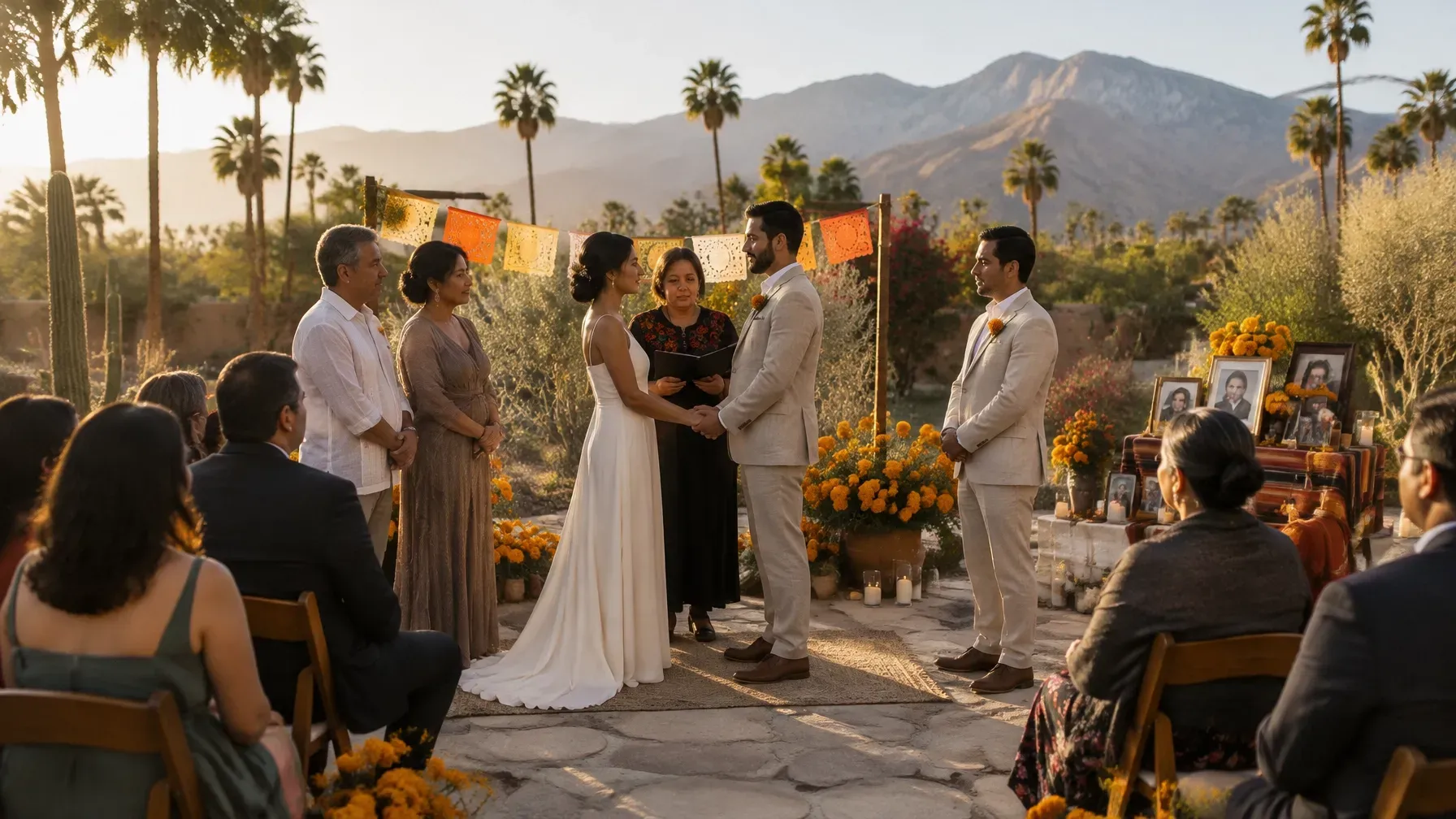
Families often create an ofrenda, or altar, to welcome and remember loved ones. Photos, candles, food, personal objects, and flowers often appear on the display. Cempasúchil, or Mexican marigolds, often bring vivid color and fragrance. Papel picado adds movement and color. Pan de muerto is a traditional sweet bread served during the season. Meanings and customs vary by family and region, so ask before assuming one approach fits everyone.
La Catrina also carries a specific history. Her elegant skeleton image traces to artist José Guadalupe Posada’s satirical work and later became closely linked with Día de los Muertos imagery. Treat her as cultural art with history, not a generic costume or spooky wedding theme. The Mexican Museum’s Día de los Muertos guide offers more background on the holiday, altars, and Catrina.
Why couples honor loved ones at a wedding
A wedding marks a new chapter, while also recognizing the people who helped shape your lives. A parent, grandparent, sibling, or close friend who has died might hold a special place in your relationship story. A thoughtful tribute gives family and guests a moment to remember them as part of the day.
For Mexican and Mexican-American couples, the ceremony also connects family heritage across generations. In the Coachella Valley, community groups such as Raíces Cultura bring residents together through art, ofrendas, music, and cultural programming. Local traditions are living traditions, carried by families and community members. Their voices belong in your planning.
Bilingual couples often want each side of the family to follow and share in the ceremony. Spanish and English readings, welcomes, and remembrance moments help guests feel included without turning a family tradition into a display.
Make the ofrenda family-led
An ofrenda at a wedding should honor specific people, not serve as a decorative backdrop. Invite relatives to help choose the photos, objects, and offerings. Ask permission before displaying someone’s photograph or personal item. A family member might wish to share a favorite recipe, a small keepsake, or a story about the person being honored.
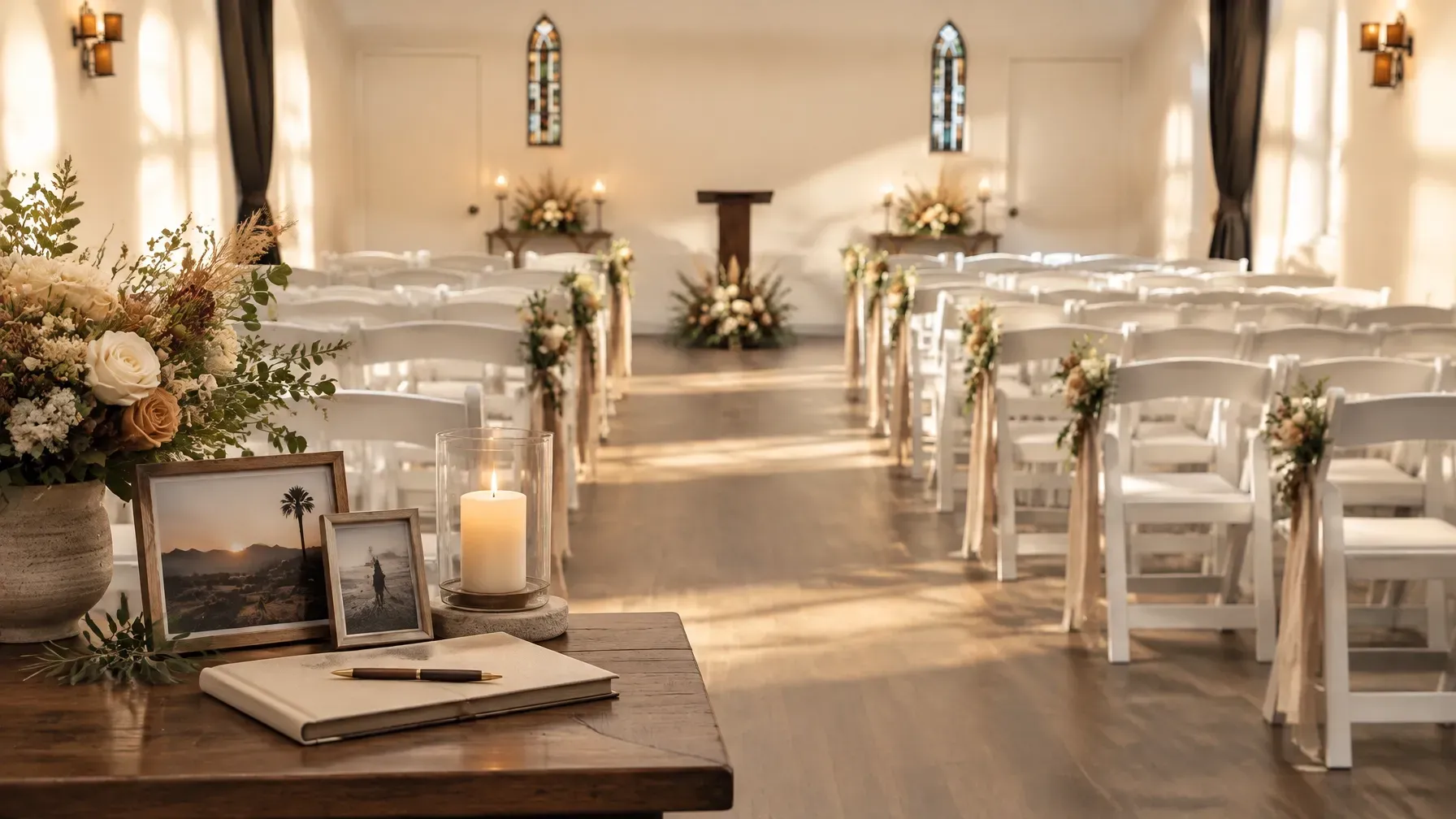
Place the table where guests will notice and approach it with care. A quiet spot near the ceremony entrance or seating area often works well. Keep the display distinct from the altar or ceremony focal point. Let guests know who the people in the photos are, and explain the family’s purpose for the display.
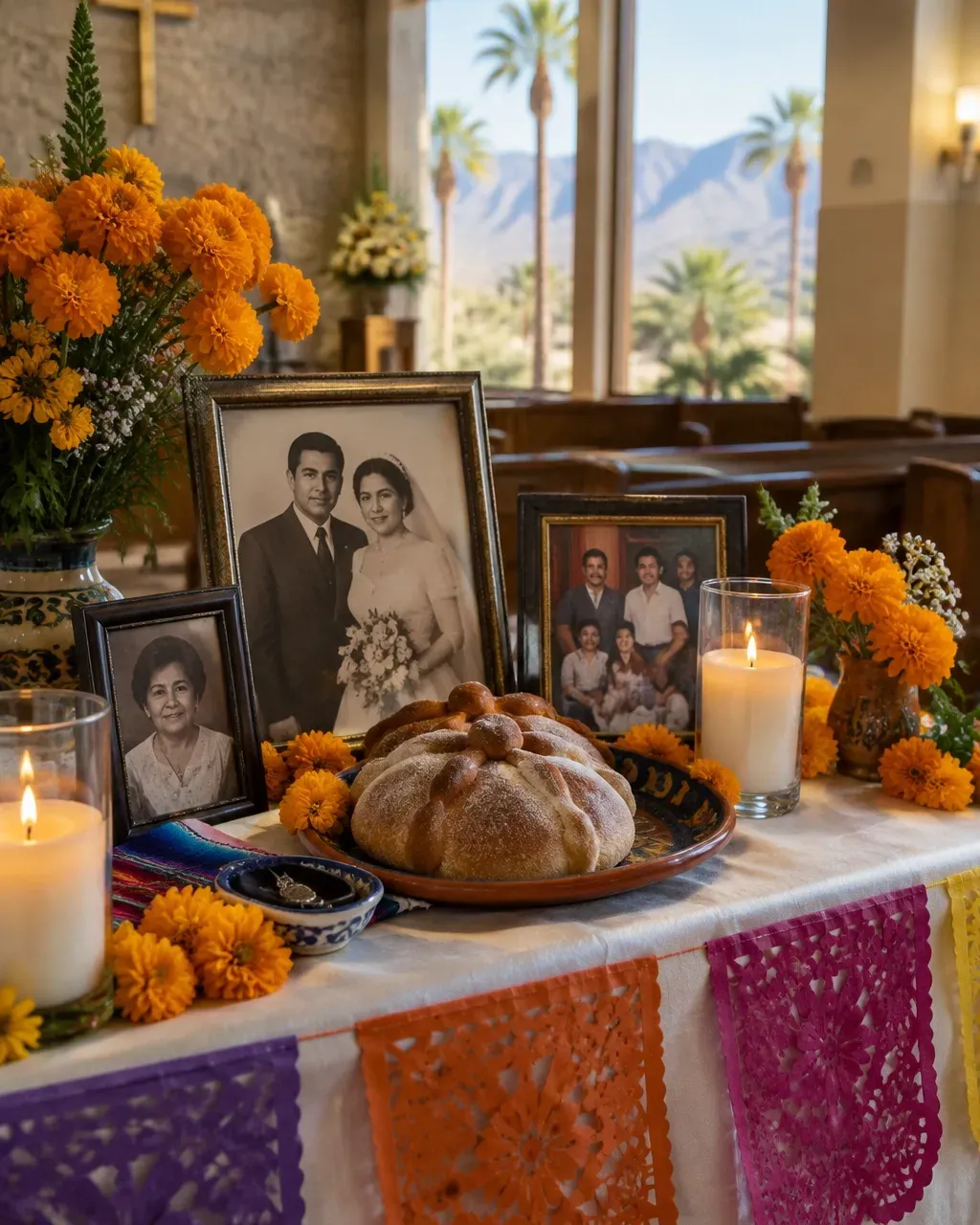
The family should decide who assembles and cares for the ofrenda. Avoid moving photos or offerings during the ceremony, and do not treat the table as a photo prop. If your family prefers a simpler remembrance table rather than a traditional ofrenda, follow their lead.
Add a ceremony moment with meaning
A short moment of remembrance often feels more personal than adding many symbolic elements. Your officiant might name loved ones aloud, share a family-approved passage, or invite guests to hold a quiet moment of reflection. You might also light a candle, or blend sand or flowers in memory of someone. Choose a gesture tied to a real person or story in your family.
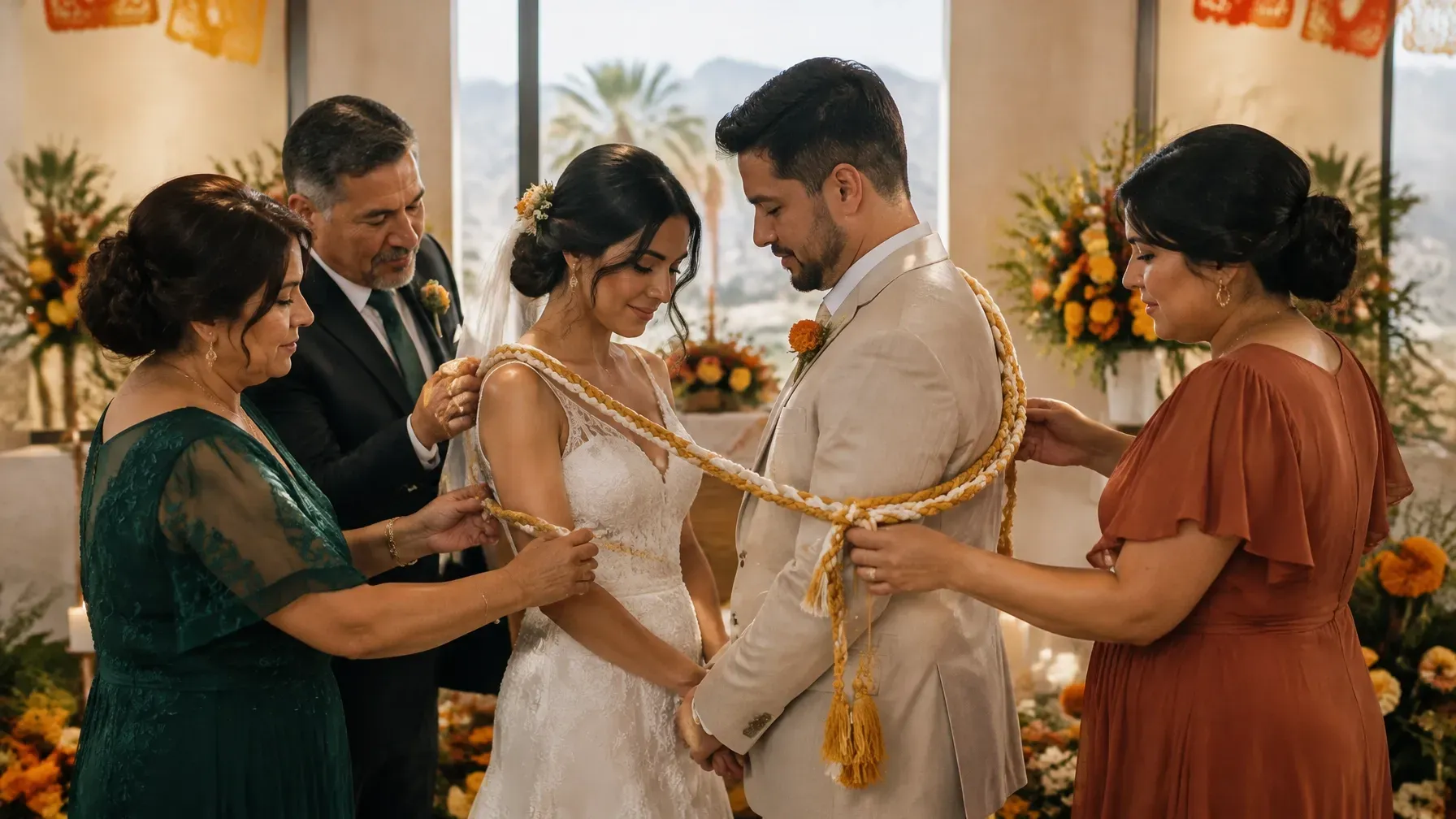
Some couples also include the lazo or arras. These are wedding traditions, not Día de los Muertos customs. In a lazo ritual, chosen family members place a cord or garland around the couple, often in a figure-eight shape, to symbolize their bond. With arras, a couple exchanges thirteen coins as a sign of shared responsibility and care. Couples often adapt the exchange to express mutual commitment. Practices differ, so discuss the words and roles with your family and officiant. The coins ceremony also appeared in one of our recent Shout-Out Saturday posts. For more background, see the USC Digital Folklore Archives overview of lazo and arras traditions.
You might invite close relatives to stand beside you in an unbroken family circle. Or ask a parent, elder, or chosen family member to place the lazo. These gestures help living family members take an active role in welcoming your marriage.
Make room for both English and Spanish
A bilingual ceremony does not need to repeat every sentence twice. Your officiant might welcome guests in both languages, read a short passage in Spanish, then summarize the meaning in English. You might also alternate languages through the ceremony or invite relatives to share a few words in the language they use at home.
Ask relatives to help select songs, poems, or readings. A Spanish-language song with family meaning says more than a familiar wedding standard. Confirm names and pronunciations in advance. If some guests speak only one language, give them a short printed program or a clear spoken introduction to each ceremony moment.
Style with care
Marigolds, papel picado, warm candlelight, deep purple, and orange bring color and seasonal character to a wedding. Use them where they hold meaning for your family, rather than adding each element because it looks festive. Keep skull imagery and La Catrina art respectful and well understood. Skip costume makeup and caricature.
Check venue rules for open flames. Glass-enclosed or flameless candles offer a safer option where needed. If you serve pan de muerto or other food near the ofrenda, label ingredients and consider allergies. Keep the display accessible for relatives who wish to pause and remember.
A family-centered planning check
Before finalizing your ceremony, sit down with the relatives closest to the tradition. Ask what feels appropriate, which loved ones they wish to honor, and whether they want a family elder or local cultural artist to advise on the plan. Learn the meaning of each element you plan to include.
Decide who will gather photos and objects, who will build and care for the ofrenda, and where the table will stand. Share your plans with the officiant early. Discuss bilingual wording, music, ceremony timing, venue rules, and any cultural or religious elements requiring special care.
How Today We Become One supports your ceremony
Our officiants work with couples to shape personal ceremonies around family, culture, and the moments you want to share. We offer bilingual English and Spanish ceremonies, a chapel in Palm Desert, and destination ceremonies across Greater Palm Springs and beyond.
We also provide ceremony and unity items, musicians, photography and videography, live-streaming, and keepsakes. Our team helps coordinate the details so you and your family focus on the meaning of the day.
Explore our ceremony officiants, wedding chapel packages, and destination packages.
To talk through your ideas, contact Today We Become One.